
Outbox 模式解决了消息的可靠发布问题,但消费端呢?
消息发布方可靠地把消息送出,Broker 也成功投递,消费者处理完毕——然后出事了。一个超时,一次崩溃,一个网络闪断。Broker 认为 ACK 没收到,于是重新投递同一条消息。消费者把同样的逻辑跑了两遍。
这就是 Inbox 模式要解决的问题。
为什么需要 Inbox
绝大多数消息中间件提供的是至少一次投递(at-least-once delivery)。Broker 保证每条消息都会被投递,但不保证只投递一次。
一个典型的失败路径:
- Broker 将消息投递给消费者
- 消费者成功处理
- ACK 还没到达 Broker,连接断了
- Broker 认为消息丢失,重新投递
- 消费者把同一条消息处理了两次
解决办法之一是让每个 Handler 实现幂等性。这能用,但意味着每个消费者都要在做任何实际工作之前先查一遍去重表。Inbox 模式把这件事集中到基础设施层,只处理一次。
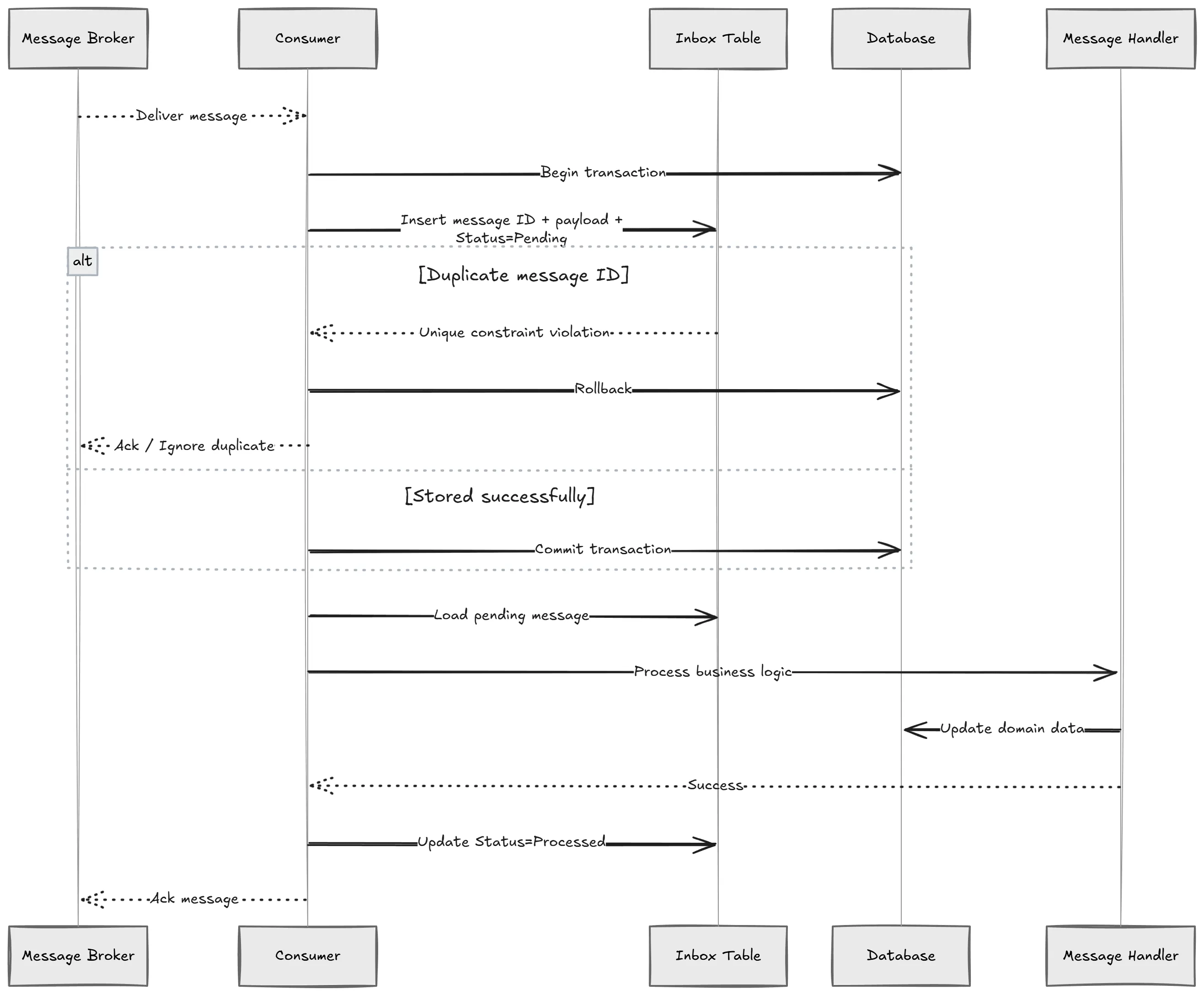
核心思路:
- 消息从 Broker 到达
- 不立即处理,而是写入 inbox 表
- 如果消息已存在(重复投递),写入被静默忽略
- 后台进程读取未处理的消息并分发处理
这将消息接收和处理解耦。消费者变成一个薄薄的持久化层,不会产生重复。
数据库表结构
inbox_messages 表存储所有到达的消息:
CREATE TABLE IF NOT EXISTS inbox_messages (
    id UUID PRIMARY KEY,
    type VARCHAR(255) NOT NULL,
    content JSONB NOT NULL,
    received_on_utc TIMESTAMP WITH TIME ZONE NOT NULL,
    processed_on_utc TIMESTAMP WITH TIME ZONE NULL,
    error TEXT NULL
);

CREATE INDEX IF NOT EXISTS idx_inbox_messages_unprocessed
ON public.inbox_messages (received_on_utc, processed_on_utc)
INCLUDE (id, type, content)
WHERE processed_on_utc IS NULL;
结构和 Outbox 模式的 outbox_messages 表镜像对应。id 字段通过 ON CONFLICT DO NOTHING 实现幂等插入。过滤索引只索引未处理的消息,已处理的消息自动从索引中排除,保持索引小而精。
服务间传递的消息基于一个共享的 IntegrationEvent 基础 record:
public abstract record IntegrationEvent(Guid MessageId);

public sealed record OrderCreatedIntegrationEvent(Guid OrderId)
    : IntegrationEvent(Guid.CreateVersion7());
Inbox Consumer
消费者是一个 MassTransit IConsumer<T>。它不处理消息,只是把消息写入 inbox 表然后返回。可以做成泛型,适配所有 Integration Event:
internal sealed class InboxConsumer<T>(NpgsqlDataSource dataSource)
    : IConsumer<T> where T : IntegrationEvent
{
    public async Task Consume(ConsumeContext<T> context)
    {
        await using var connection = await dataSource.OpenConnectionAsync(
            context.CancellationToken);

        const string sql = """
            INSERT INTO public.inbox_messages (id, type, content, received_on_utc)
            VALUES (@Id, @Type, @Content::jsonb, @ReceivedOnUtc)
            ON CONFLICT (id) DO NOTHING;
            """;

        await connection.ExecuteAsync(sql, new
        {
            Id = context.Message.MessageId,
            Type = typeof(T).FullName,
            Content = JsonSerializer.Serialize(context.Message),
            ReceivedOnUtc = DateTime.UtcNow
        });
    }
}
ON CONFLICT (id) DO NOTHING 是真正在发挥作用的那一行。如果 Broker 投递了同一条消息两次,第二次插入会被静默忽略。在插入成功但 ACK 发出前崩溃?下次重新投递时同样会被安全去重。
Inbox Processor
Processor 运行在后台服务或定时任务中,批量获取未处理的消息并分发处理:
internal sealed class InboxProcessor(
    NpgsqlDataSource dataSource,
    IEventDispatcher eventDispatcher,
    ILogger<InboxProcessor> logger)
{
    private const int BatchSize = 1000;

    public async Task<int> Execute(CancellationToken cancellationToken = default)
    {
        await using var connection = await dataSource.OpenConnectionAsync(cancellationToken);
        await using var transaction = await connection.BeginTransactionAsync(cancellationToken);

        var messages = (await connection.QueryAsync<InboxMessage>(
            """
            SELECT id AS Id, type AS Type, content AS Content
            FROM inbox_messages
            WHERE processed_on_utc IS NULL
            ORDER BY received_on_utc
            LIMIT @BatchSize
            FOR UPDATE SKIP LOCKED
            """,
            new { BatchSize },
            transaction: transaction)).AsList();

        var processedAt = DateTime.UtcNow;
        var results = new List<(Guid Id, DateTime ProcessedAt, string? Error)>(messages.Count);

        foreach (var message in messages)
        {
            try
            {
                var messageType = Type.GetType(message.Type)!;
                var deserialized = JsonSerializer.Deserialize(message.Content, messageType)!;
                await eventDispatcher.DispatchAsync(deserialized, cancellationToken);
                results.Add((message.Id, processedAt, null));
            }
            catch (Exception ex)
            {
                logger.LogError(ex, "Failed to process inbox message {Id}", message.Id);
                results.Add((message.Id, processedAt, ex.ToString()));
            }
        }

        if (results.Count > 0)
        {
            await connection.ExecuteAsync(
                """
                UPDATE inbox_messages
                SET processed_on_utc = v.processed_on_utc,
                    error = v.error
                FROM UNNEST(@Ids, @ProcessedAts, @Errors)
                    AS v(id, processed_on_utc, error)
                WHERE inbox_messages.id = v.id
                """,
                new
                {
                    Ids = results.Select(r => r.Id).ToArray(),
                    ProcessedAts = results.Select(r => r.ProcessedAt).ToArray(),
                    Errors = results.Select(r => r.Error).ToArray()
                },
                transaction: transaction);
        }

        await transaction.CommitAsync(cancellationToken);
        return messages.Count;
    }
}
几个关键设计点:
FOR UPDATE SKIP LOCKED:让多个 Processor 实例并发运行而互不竞争。这和 Outbox 模式横向扩展时采用的方法相同。- 用
UNNEST批量更新:所有结果一次 round-trip 写入,最小化数据库往返次数。 - 错误捕获:失败的消息会被标记错误信息,不会阻塞整个队列继续处理。
如果 Processor 在批次处理中途崩溃,事务会回滚,这批消息在下一次运行时会被重新拾取。
几个需要注意的地方
表体积增长:inbox 表会无限增长。可以在保留期到达后删除已处理的消息,或者按时间范围分区并丢弃旧分区,也可以归档到另一张表以保留历史记录。
毒消息(Poison messages):如果某条消息持续处理失败,它每次都会被标记错误并留在表里。考虑设置最大重试次数,超过 N 次失败后将其送入死信队列并告警。
消息顺序:ORDER BY received_on_utc 给出的是大致按到达时间排序的结果。但配合 SKIP LOCKED 和多个 Processor 实例,严格顺序无法保证。如果需要按聚合根维度的有序处理,需要额外的协调机制。
监控滞后:跟踪 received_on_utc 和 processed_on_utc 之间的时间差。如果这个差值持续增长,说明处理能力跟不上,可以增大批次大小、缩短轮询间隔,或者横向扩展更多 Processor 实例。
Inbox 与幂等消费者的区别
Inbox 模式和幂等消费者(Idempotent Consumer)都能防止重复处理,区别在于处理发生的时机和谁来控制重试。
幂等消费者在消息到达时立即处理。它先查去重表,再执行业务逻辑,最后在同一个事务里记录去重条目。如果处理失败,事务回滚,去重记录不留下,Broker 按自己的节奏重新投递消息。这意味着你不能控制重试的时机和间隔。
Inbox 模式把接收和处理分开。Consumer 写入消息然后立即 ACK,Broker 就此退场。如果 Processor 失败,它记录错误并继续处理下一条。重试是你自己的责任:可以把失败消息的 processed_on_utc 重置为 NULL,或者用一个单独的循环按延迟重新处理失败消息。
适用场景的选择思路:
- 副作用是事务性的,Broker 来管理重试已经够用 → 幂等消费者
- 需要批量处理、自定义重试策略、或者通过
FOR UPDATE SKIP LOCKED横向扩展 → Inbox 模式
小结
Inbox 模式是 Outbox 模式的消费端对应物,核心机制是:
ON CONFLICT DO NOTHING让消费者插入天然幂等- 接收与处理分离 带来独立的重试控制能力
FOR UPDATE SKIP LOCKED实现 Processor 的横向扩展UNNEST批量更新 最小化数据库 round-trip
如果你在构建事件驱动系统,把 Outbox 和 Inbox 配对使用,就能在发布侧和消费侧都建立起可靠的消息保障。
参考
- Implementing the Inbox Pattern for Reliable Message Consumption - Milan Jovanović
- Implementing the Outbox Pattern - Milan Jovanović
- The Idempotent Consumer Pattern - Milan Jovanović
- Scaling the Outbox Pattern - Milan Jovanović